
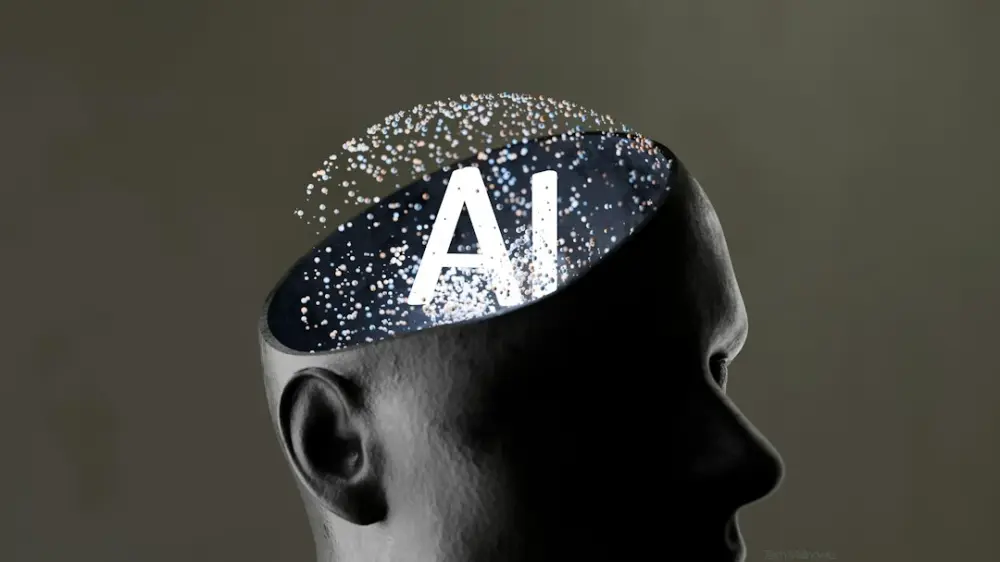
The threshold of the Uncanny Valley has long served as a cautionary boundary for roboticists and digital artists alike. This psychological phenomenon, where a near-human representation triggers a sense of unease or revulsion in observers, once stood as a formidable barrier to the adoption of digital avatars in professional and personal spheres. However, as generative artificial intelligence matures, we are witnessing a paradigm shift. We are no longer merely attempting to mimic human appearance; we are successfully synthesising human presence.
Digital humans are evolving from static, often clunky profile pictures into dynamic, emotionally resonant entities capable of real-time interaction. This evolution is driven by a convergence of high-fidelity 3D rendering, sophisticated natural language processing (NLP), and neural voice synthesis. As these technologies coalesce, the distinction between a physical recording and a synthetic generation is becoming increasingly academic, opening new vistas for how we project ourselves into the digital world.
The Technical Architecture of Modern Avatars
To understand how we moved beyond the uncanny valley, one must look at the underlying stack of technologies now powering digital humans. In previous decades, creating a realistic human model required months of manual labour by specialized CGI artists. Today, the process is being streamlined through Neural Radiance Fields (NeRFs) and advanced diffusion models that can reconstruct 3D geometries from a handful of 2D images.
Generative Facial Synthesis
The primary reason older avatars felt 'uncanny' was the lack of micro-expressions—the tiny, subconscious movements of the eyes and mouth that signal authenticity. Modern AI tools now employ generative adversarial networks (GANs) to map these nuances with staggering precision. By training on vast datasets of human emotion, these systems can synchronise lip movements to any spoken audio in real-time, ensuring that the visual output matches the phonetic delivery without the 'drift' that previously broke immersion.
Voice Cloning and Emotional Inflection
Visual fidelity is only half the battle. A digital human that looks like a person but sounds like a machine remains trapped in the valley. The latest breakthroughs in text-to-speech (TTS) technology allow for the cloning of specific vocal timbres, including the subtle breaths, pauses, and pitch shifts that define individual speech patterns. These digital humans can now whisper, express excitement, or convey empathy, making them viable for applications that require a high degree of emotional intelligence.
The Commercial Imperative: Scaling Presence
For the enterprise, the allure of AI avatars extends far beyond novelty. In an era where personalisation is the primary currency of customer experience, the ability to provide a 'human' face at scale is a significant competitive advantage. As organisations navigate the Rise Intelligent shift, the integration of digital humans provides a relatable interface for complex backend algorithms.
Customer service is perhaps the most immediate beneficiary. Traditional chatbots, while functional, often lack the rapport-building capabilities of a human agent. A digital human, powered by a Large Language Model (LLM), can handle thousands of concurrent queries while maintaining a consistent brand personality. They don't suffer from fatigue, they possess perfect product knowledge, and they can communicate in dozens of languages simultaneously, effectively globalising a brand's presence overnight.
Sector-Specific Transformations
The impact of high-fidelity digital humans is being felt across diverse industries, each leveraging the technology to solve unique challenges of engagement and accessibility.
- Education and Training: AI tutors can provide personalised, one-on-one instruction, adapting their teaching style to the student's emotional state. In corporate settings, digital humans are used for role-playing scenarios, allowing employees to practice difficult conversations with a responsive, non-judgmental partner.
- Healthcare: Digital health assistants are being deployed to provide medication reminders and mental health support. The presence of a 'friendly face' has been shown to improve patient compliance and reduce the feelings of isolation often associated with chronic care.
- Media and Entertainment: We are seeing the rise of 'synthetic influencers' and virtual news anchors. These entities can be deployed across multiple platforms 24/7, creating a continuous stream of content that is perfectly aligned with audience demographics and trending topics.
The Democratisation of Digital Identity
Perhaps the most significant aspect of this technological leap is its accessibility. Not long ago, the creation of a digital twin was a privilege reserved for Hollywood studios and AAA game developers. Today, browser-based platforms allow small business owners and individual creators to generate professional-grade video content using AI avatars with nothing more than a text script.
This democratisation is fostering a new era of 'maker culture' within the digital space. Just as desktop publishing revolutionised the written word, AI avatar tools are revolutionising video production. Creators can now maintain a consistent digital presence without the need for expensive cameras, lighting rigs, or even their own physical presence in front of a lens. This allows for a level of content output that was previously impossible for a single individual to sustain.
Navigating the Ethical Landscape
As we bridge the uncanny valley, we must also confront the ethical complexities that arise when synthetic humans become indistinguishable from real ones. The potential for 'deepfakes' and identity theft necessitates a robust framework for digital provenance. We are seeing the emergence of watermarking technologies and blockchain-based verification systems designed to ensure that viewers can distinguish between a real human and a synthetic representation.
Furthermore, there is the question of 'digital legacy.' As we create increasingly accurate digital twins, the possibility of these avatars persisting after the individual's death becomes a reality. This raises profound questions about consent, ownership, and the nature of memory in the digital age. Industry leaders and policymakers are currently grappling with these issues, seeking a balance between innovation and the protection of individual rights.
The Future of Embodied AI
Looking ahead, the trajectory of digital humans is pointing toward even deeper integration with our physical reality. Through the lens of spatial computing and augmented reality (AR), AI avatars will no longer be confined to flat screens. They will inhabit our physical spaces, sitting across from us in virtual meetings or standing beside us as we learn new skills in the workplace.
The convergence of intelligent automation and embodied AI suggests a future where our primary interaction with technology is social rather than transactional. By moving beyond the uncanny valley, we are not just making machines look more like us; we are creating a more intuitive, human-centric way to navigate the digital universe. The avatar is no longer a mere mask; it is becoming a sophisticated extension of human intent and a vital component of the modern intelligent ecosystem.