
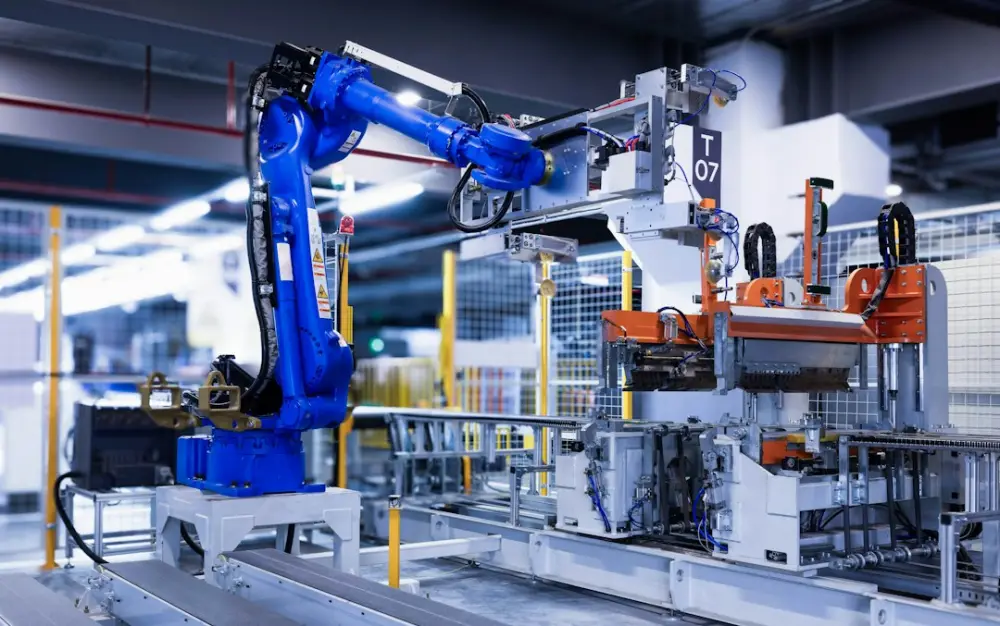
Robotics pilot planning is the strategic process of designing and validating a small-scale robot deployment to test its feasibility in an industrial environment. It involves mapping workflows, setting performance benchmarks, and identifying technical constraints. This phase ensures that robotic systems integrate seamlessly with existing infrastructure before a full-scale rollout begins in 2026.
A pilot should test the actual work area, handoffs, and software connections before a wider deployment. Define what you need to learn, collect baseline measurements, and agree on review criteria. This gives the team evidence for deciding whether to expand, revise, or stop the trial.
What is Robotics Pilot Planning?
At its most practical level, pilot planning is a risk management strategy. It allows a facility manager to take a theoretical automation solution and place it into a controlled, real-world scenario. For instance, a logistics center might plan a pilot for three autonomous mobile robots (AMRs) to handle pallet transport between the receiving dock and the storage racks. Instead of outfitting the entire 500,000-square-foot facility, the pilot focuses on a single high-traffic lane.
This process establishes the "ground truth" of the technology. You are no longer looking at a vendor’s spec sheet; you are looking at how the robot’s LiDAR sensors react to the specific lighting conditions of your warehouse or how its battery life holds up during a standard eight-hour shift. Understanding the rise of intelligent automation: what businesses need to track helps in setting these initial benchmarks. The goal is to identify points of failure early when they are still inexpensive to fix.
A pilot also serves as a cultural introduction. It gives the human workforce a chance to interact with the machinery in a low-stakes environment. When workers see that a robotic arm is designed to stop instantly when a person enters its safety zone—using ISO-standard light curtains or pressure mats—anxiety regarding the new technology typically decreases. This human-centric data is just as vital as the technical throughput metrics.
Common Challenges in Industrial Robot Deployment
One of the most frequent hurdles in industrial deployment is legacy infrastructure. Many factories operate with Programmable Logic Controllers (PLCs) or Warehouse Management Systems (WMS) that were installed a decade ago. These systems often lack the modern APIs required for seamless communication with a 2026-era robotic fleet. If the robot cannot tell the conveyor belt to stop so it can pick a part, the entire automation chain breaks down.
Environmental variables also present significant challenges. An industrial robot that performed perfectly in a clean-room demonstration might struggle in a fabrication shop filled with metallic dust or uneven concrete flooring. For example, a heavy-duty AGV (Automated Guided Vehicle) might lose traction on a floor that has a 3-degree incline, a detail often overlooked in the initial procurement phase but caught immediately during a pilot study.
Connectivity is another bottleneck. Industrial environments are often "Faraday cages" of corrugated metal and heavy machinery that disrupt Wi-Fi signals. If a robot relies on a cloud-based brain to make navigation decisions, a three-second drop in connectivity can result in a complete stoppage. Planning for edge computing—where the robot processes data locally—is a common adjustment made during the pilot phase to circumvent these dead zones.
Finally, there is the challenge of "edge cases." In a laboratory, every box is perfectly square and placed at a 90-degree angle. In a real-world shipping hub, boxes are crushed, taped awkwardly, or stacked precariously. A pilot program tests the vision system’s ability to handle these imperfections without requiring constant human intervention. High-performance systems often reference top 7 real-world use cases of successful deployments to see how others have solved these specific environmental hurdles.
How the Robotics Pilot Planning Process Works
The process begins with a comprehensive site audit. Engineers walk the floor to map out physical obstacles, power source locations, and network access points. This isn't just about where the robot goes, but where it stays when it isn't working. For example, a charging station for a fleet of cleaning robots needs a dedicated 220V outlet and enough clearance for the robots to dock without blocking emergency exits.
Once the audit is complete, the team moves into the simulation phase. Digital twin technology allows planners to run thousands of cycles in a virtual version of the facility. This helps predict traffic jams between robots and identifies the most efficient paths. If the simulation shows that four robots will bottleneck at a specific narrow corridor, the plan can be adjusted to a one-way traffic rule before a single piece of hardware is unboxed.
The physical deployment follows, usually starting with a "dry run." During this stage, the robot moves through its designated paths without carrying any load or performing any tasks. This verifies that the SLAM (Simultaneous Localization and Mapping) software has accurately captured the environment. If the robot successfully completes its rounds for 48 hours without a navigation error, it graduates to "live load" testing where it begins performing its intended function at a reduced speed.
Data collection during this phase must be granular. Planners look at the Mean Time Between Interventions (MTBI). If a technician has to reset a robot every 45 minutes because it gets confused by a specific reflection off a stainless steel surface, the pilot has identified a critical flaw that needs a hardware or software patch before the project can scale.
How RCSV Technology Supports Pilot Execution
Remote Control and Supervision Vehicle (RCSV) systems have become essential for modern industrial pilots. RCSV technology provides a secondary layer of oversight that doesn't require a technician to stand next to the robot with a pendant. Instead, the RCSV acts as a mobile monitoring station or a centralized software hub that tracks the health and telemetry of the entire pilot fleet in real-time.
In a scenario where a company is testing autonomous forklifts, RCSV tools allow operators to see exactly what the robot’s sensors see. If the forklift stops because it perceives an obstacle that isn't there—a "ghost" obstacle often caused by steam or bright sunlight—the RCSV allows a remote operator to verify the path is clear and command the robot to continue. This prevents the pilot from grinding to a halt every time a sensor misinterprets the environment.
Moreover, RCSV systems aggregate long-term performance data that is difficult to capture manually. They track battery degradation cycles, motor heat levels, and software latency. According to standards set by organizations like the National Institute of Standards and Technology (NIST), having a verifiable data trail is crucial for meeting safety certifications in 2026. This data becomes the primary evidence used to justify the capital expenditure for a full-scale rollout.
Getting Started with Your Deployment Plan
To begin, identify a single, repetitive task that currently creates a bottleneck in your operation. Avoid the temptation to automate the most complex task first. Instead, choose a "low-hanging fruit" scenario, such as moving empty bins from a packing station back to the start of the line. This allows the team to learn the nuances of the hardware without risking a total production shutdown if the pilot encounters issues.
Assemble a cross-functional team. This should include a floor supervisor who understands the daily workflow, an IT specialist who can manage network permissions, and a safety officer. Documentation is your most valuable asset during this stage. Every error, no matter how small, must be logged. Use a standardized template to record the time, location, and nature of every robot stoppage. This log will eventually form the basis of your troubleshooting manual.
Set clear "Go/No-Go" criteria before the pilot begins. For example, you might decide that the pilot is a success if the robotic system can operate for 72 hours with fewer than three human interventions. Having these objective metrics prevents "pilot purgatory," where a project continues indefinitely without ever reaching full production because the goals were never clearly defined.
Accessing the RCSV Planning Portal
The final step in a modern deployment is integrating your local data into a broader planning portal. This digital environment allows you to compare your pilot results against industry standards and previous internal tests. It serves as a central repository for your 3D maps, sensor logs, and safety audits. By centralizing this information, you ensure that the lessons learned in one facility can be applied to the next one, preventing redundant mistakes.
In 2026, the transition to intelligent automation is no longer about the robots themselves, but about the quality of the data driving them. A well-executed pilot provides the empirical evidence needed to move from a conceptual idea to a high-efficiency reality. Practical deployment depends on this bridge between the laboratory and the factory floor.
At ArimaZ, we focus on the intersection of hardware reliability and intelligent software. Our approach to robotics pilot planning emphasizes calm, methodical testing to ensure that every autonomous system we support drives real-world impact. By grounding every deployment in specific, site-based data, ArimaZ helps industries navigate the complexities of automation with confidence and precision.